
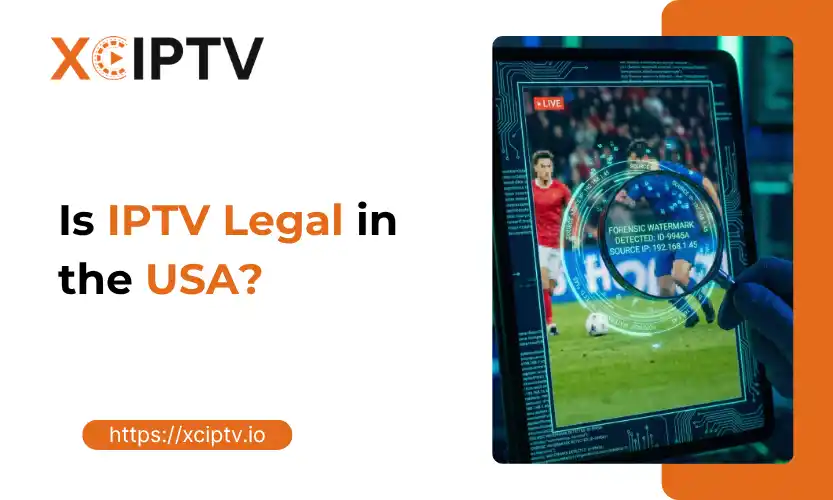
IPTV technology itself is completely legal. What determines legality is whether the service you use holds proper licensing agreements with content rightsholders. Platforms like YouTube TV, Hulu + Live TV, Sling TV, Fubo, and Pluto TV are fully compliant because they negotiate formal carriage agreements and remit licensing fees. Unauthorized services that capture and rebroadcast copyrighted feeds without permission — often sold for suspiciously low monthly rates via Telegram, Reddit, or pre-configured Android boxes — violate federal copyright law and expose consumers to severe administrative, civil, and cybersecurity consequences. This guide explains exactly where the legal lines sit in 2026, what has changed at the Supreme Court level, and why the risks of grey-market IPTV now extend far beyond a warning letter.
Understanding IPTV: The Technology vs. The Content
How Internet Protocol Television Actually Works
Internet Protocol Television (IPTV) is a delivery method, not a content category. Instead of transmitting video signals through traditional cable or satellite infrastructure, IPTV delivers audio-visual content as data packets across standard internet connections. The receiving device — a smart TV, streaming stick, set-top box, or smartphone — reassembles those packets and renders the video in real time.
This architecture powers fully licensed services like YouTube TV just as easily as it powers unauthorized grey-market streams. The technology is neutral. The content licensing status is not.
The Critical Difference Between Licensed OTT Platforms and Unlicensed M3U Playlists
Licensed Over-The-Top (OTT) providers negotiate formal carriage agreements with broadcasters and studios, remitting licensing fees that fund the content creation ecosystem. Their applications are distributed through tightly moderated storefronts — the Apple App Store, Google Play, Roku Channel Store — and use industry-standard Digital Rights Management (DRM) systems to protect the streams they have legally purchased.
Unlicensed services operate by systematically capturing, decrypting, and rebroadcasting these same protected feeds without authorization. They are typically accessed through M3U playlists loaded into generic IPTV player applications, through Xtream Codes-based portals, or via pre-configured Android Application Packages (APKs) sideloaded onto Fire TV Sticks and Android boxes. These are the services heavily marketed through affiliate blogs, dedicated subreddits, and encrypted messaging channels like Telegram. No licensing fees are paid. No carriage agreements exist. The low subscription price — often between $5 and $15 per month for tens of thousands of channels — is only possible because the service has paid for nothing.
The Legal Framework Governing IPTV in 2026
The Protecting Lawful Streaming Act (PLSA): When Streaming Becomes a Felony
The Protecting Lawful Streaming Act (PLSA), signed into federal law on December 27, 2020, represents the primary criminal statute governing commercial streaming piracy in the United States. The PLSA amended existing copyright law to allow the Department of Justice to bring felony-level charges against parties who willfully operate illicit streaming services for commercial advantage or private financial gain — with penalties reaching up to ten years in federal prison per count [USPTO, 2020].
A critical nuance that most guides get wrong: the PLSA was intentionally crafted by Congress to target the operators of piracy platforms, not individual end-consumers passively watching a stream. However, end-users are far from immune to consequence. Consumers utilizing these services remain fully exposed to civil liability from rightsholders, administrative action from their Internet Service Providers, and — as discussed in detail below — severe cybersecurity risks that competing articles systematically understate.
The Digital Millennium Copyright Act (DMCA) and Safe Harbor Provisions
The Digital Millennium Copyright Act (DMCA) of 1998 remains the foundational statute for online copyright enforcement. Its “safe harbor” provisions are particularly relevant to IPTV consumers: these provisions protect Internet Service Providers from direct liability for their users’ infringing activity, provided the ISP maintains and enforces a credible repeat-infringer policy. In practice, this means that every major broadband provider in the United States — Comcast Xfinity, AT&T, Spectrum, and others — is legally obligated to operate a graduated warning and termination program for users detected infringing copyright. Safe harbor protection evaporates for ISPs that refuse to act on documented infringement.
Legislative Horizon: The Foreign Anti-Digital Piracy Act (FADPA)
A significant gap in most 2026 guides is the failure to address the Foreign Anti-Digital Piracy Act (FADPA), introduced by Representative Zoe Lofgren in January 2025. While the PLSA targets domestic criminal operators, FADPA specifically addresses a long-standing jurisdictional weakness: foreign piracy websites operating beyond the reach of U.S. law enforcement.
FADPA proposes codifying the legal process for U.S. courts to order ISPs to block access to foreign platforms engaged in systematic copyright infringement [ITIF, 2025]. Its most impactful mechanism is the introduction of “dynamic and live injunctions” — court orders that can be executed in real time, specifically designed to block proxy sites or interrupt illegal broadcasts of live sporting events without waiting for the months-long traditional litigation process. For consumers, this means the legal architecture for cutting off access to pirated Premier League or NFL streams mid-broadcast is now being actively constructed at the federal level.
The Landmark 2026 Supreme Court Ruling: Sony v. Cox
Analyzing the 9-0 SCOTUS Decision on Secondary Liability
On March 25, 2026, the U.S. Supreme Court issued one of the most consequential copyright decisions in decades. In Cox Communications, Inc. v. Sony Music Entertainment (Docket No. 24-171), the Court ruled unanimously — 9-0 — in favor of Cox Communications [SCOTUSblog]. The decision, authored by Justice Clarence Thomas, reversed a staggering $1 billion jury verdict that had been entered against Cox in lower courts [Music Business Worldwide, 2026].
The Court’s holding established a new, significantly higher evidentiary threshold for secondary liability: a rightsholder seeking to hold an ISP contributorily liable must now demonstrate that the ISP actively encouraged infringement or provided a service specifically tailored with the intent to facilitate illegal activity. Mere knowledge that some subscribers may be infringing, combined with continued provision of internet access, is no longer sufficient to establish liability.
Why ISPs Are No Longer the Ultimate Copyright Enforcers
For years, the threat of crippling secondary liability verdicts acted as the primary compliance lever forcing ISPs to aggressively police their subscribers. The Sony v. Cox decision fundamentally disrupts that dynamic. ISPs are no longer under immediate threat of financial ruin for passively providing internet access to subscribers who may be streaming illicit content.
Practitioners in the intellectual property field have noted that this shifts a significant enforcement burden away from the broadband layer entirely, since the fear of a billion-dollar judgment was the most powerful tool compelling ISPs to enforce graduated response programs with strict rigor. The practical implications for consumers who use illicit IPTV are mixed: ISPs may operate their repeat-infringer programs with slightly less aggressive urgency, but this does not mean enforcement has weakened overall.
The Shift in Rightsholder Strategy Following the $1 Billion Reversal
The Sony v. Cox ruling is forcing the Alliance for Creativity and Entertainment (ACE), the International Broadcaster Coalition Against Piracy (IBCAP), and major studios to pivot their enforcement strategies substantially. With the ISP liability lever weakened, rightsholders are redirecting resources toward two parallel tracks: direct criminal prosecution of pirate operators and advanced technological tracking of individual content leaks. Both tracks are accelerating rapidly in 2026, and both represent a more targeted — and arguably more effective — threat to end-users than DMCA warning letters ever were.
How ISPs Handle Copyright Infringement (2026 Policies)
Navigating AT&T’s Copyright Alert Program
AT&T operates a formalized Copyright Alert Program that allows rightsholders to submit reports of IP addresses detected engaging in unauthorized content distribution or access [AT&T DMCA Policy]. Upon receiving a verified report, AT&T transmits alerts to the account holder. Mitigation measures escalate with each repeated offense and include limiting internet access speeds, suspending the account, or mandating completion of a copyright education course. The specific number of alerts before account termination is not publicly disclosed in fixed terms, but the program functions as a documented escalation ladder.
Comcast Xfinity’s Repeat Infringer Policy and the “12 Strikes” Escalation
Comcast Xfinity’s repeat-infringer policy, required to maintain the ISP’s DMCA safe harbor status, operates through a series of graduated responses [Xfinity DMCA Policy]. Consumer experience reports from communities like r/Spectrum document the lived reality of this escalation in granular detail. Users who have navigated these systems report that Spectrum’s process involves approximately 12 documented infringement events before permanent account termination, with the account being placed in “quarantine” — blocking all internet access until the subscriber confirms receipt of the notice — at multiple points along that path [Reddit, r/Spectrum]. One user documented the anxiety of the experience precisely: after clicking through a quarantine release portal to restore internet service, they reported immediately discontinuing all illicit streaming activity, recognizing that the escalation was not theoretical.
The operational implication: every DMCA notice logged against your account is a documented step toward permanent loss of broadband service. Unlike a warning email you can ignore, a quarantine event physically interrupts your internet connection until you actively acknowledge it.
Advanced Piracy Detection: Why VPNs No Longer Guarantee Anonymity
The Rise of Edge Forensic Watermarking and MovieLabs Specifications
The most dangerous piece of misinformation circulating in 2026 is the affiliate-blog consensus that using a Virtual Private Network (VPN) provides reliable protection against detection when consuming illicit IPTV. This advice is technologically obsolete. Users themselves articulate the confusion clearly — one networking forum participant asked: if a VPN encrypts the traffic, how can an ISP or rightsholder tell it’s illegal content rather than legitimate streaming traffic? [Reddit, r/Network]. The answer is that modern enforcement doesn’t primarily rely on inspecting network traffic at all.
Major content studios now require deployment of Forensic Watermarking that meets strict specifications established by MovieLabs, the research and innovation organization backed by six major Hollywood studios [MwareTV, 2026]. These specifications mandate that the watermark must survive screen recording, re-encoding, aspect ratio cropping, resolution changes, and even analog recapture from an external camera pointed at a screen.
At NAB 2026, Synamedia launched the industry’s first edge watermarking solution — ContentArmor Edge Watermarking — which inserts these imperceptible session-specific identifiers directly at the Content Delivery Network (CDN) edge, before the stream reaches the subscriber’s device [SVG Europe, 2026]. This means the watermark is embedded in the video pixels themselves, not transmitted as metadata through the network tunnel.
How Rightsholders Trace Leaks to Specific User Sessions Despite Encryption
Here is the practical mechanism that renders VPN protection ineffective against forensic watermarking: the identifying marker is baked into the video content itself — altering pixel values at the session level in a way invisible to the human eye but fully recoverable by forensic analysis software. When an unauthorized stream is detected circulating online, the rightsholder’s forensic team extracts the embedded watermark from the pirated video file. That watermark reveals the exact user account, device identifier, session timestamp, and geographic location from which the original licensed stream was delivered.
Encrypting your network traffic via a VPN conceals where the data travels. It does nothing to alter the content of the pixels in the video frames. The VPN tunnel hides the pipe; the watermark is already inside the water.
Unlicensed streams sourced from grey-market operators are themselves copies of originally watermarked sessions. If investigators trace a leak upstream through enough redistribution layers, they arrive at an original licensed account whose session watermark survived every stage of the piracy chain.
Identifying Legal vs. Illegal IPTV Services
5 Undeniable Red Flags of an Illicit Streaming Operation
The grey market is not difficult to identify once you know what to look for. The following five indicators are consistent across virtually every documented case of unauthorized IPTV operation:
| Indicator CategoryCharacteristics of Legal IPTV ProvidersCharacteristics of Illegal IPTV Providers | ||
|---|---|---|
| Payment Methods | Major credit cards; official app store billing (Apple, Google); transparent invoicing | Cryptocurrency (Bitcoin); unsecured offshore payment portals; P2P transfers |
| App Availability | Native applications on Roku, Apple TV App Store, Google Play | Requires sideloading unverified APKs; reliance on third-party M3U playlist players |
| Content Licensing | Explicitly lists broadcasting partners and carriage agreements on corporate websites | Offers global channel access including premium PPV with zero mention of licensing |
| Pricing Structure | Subscription tiers ranging from ~$40 to $80+ per month to cover legitimate licensing costs | Offers thousands of channels and full VOD libraries for $5 to $15 per month |
| Customer Support | Registered business address; transparent privacy policy; responsive official support | Shell company registration; anonymous ownership; support via Telegram or Discord only |
The economic reality test is the most reliable single filter. Providing tens of thousands of licensed channels — including live sports, premium movie channels, and Pay-Per-View events — for $10 per month is mathematically impossible if proper licensing fees are being remitted to rightsholders. That price point is only achievable through systematic copyright infringement.
Verified, 100% Legal IPTV Providers Operating in the USA
These platforms operate fully within U.S. law because they hold formal carriage agreements and remit licensing fees to content rightsholders [Software Testing Help, 2026]:
- YouTube TV — Live television delivered via internet protocol with a confirmed content licensing framework.
- Hulu + Live TV — A Disney-operated OTT platform offering live and on-demand content under negotiated carriage agreements.
- Sling TV — A subscription streaming service offering live channels through a licensed distribution model. (Note: Sling TV faced separate privacy litigation in 2025–2026 related to alleged CCPA violations regarding viewing data sharing — demonstrating that even legitimate providers are subject to consumer protection accountability [Purplepass, 2026].)
- Fubo — A sports-focused live TV streaming platform with documented broadcast partnerships.
- Pluto TV — A free, ad-supported streaming television service operating under licensed content agreements.
The Hidden Dangers of Unauthorized IPTV
Identity Theft, Data Brokering, and Total Financial Fraud Vectors
Unlicensed streaming costs the United States economy approximately $30 billion annually, affecting an industry that employs 2.6 million Americans [The Regulatory Review, 2021]. But the financial damage to consumers themselves from participating in the grey market is not sufficiently documented anywhere in the current information landscape.
Because illicit IPTV operators function completely outside of regulatory oversight, they are not bound by any payment processing regulations, privacy laws, or data security standards. Subscribing to these services typically requires entering credit card numbers, banking details, or personal identification into unsecured offshore payment portals. These portals are frequently operated as fronts for sophisticated data brokering syndicates.
The consequences are not hypothetical. Victims of identity theft linked to these types of unregulated digital service subscriptions have documented criminals using their personal information to purchase and register vehicles, secure apartments and utilities, open multiple lines of credit, and systematically dismantle fraud alerts and credit freezes by impersonating the victim directly with credit bureaus [Reddit, r/personalfinance; Reddit, r/IAmA]. One victim’s account described the cascading financial destruction so vividly that it bears emphasis: the search for a cheap streaming service had transformed into a years-long battle to reclaim a financial identity — a reality that makes the $5 monthly subscription price look catastrophically expensive in retrospect.
Practitioners studying the cybersecurity landscape report that sideloaded Android APKs used to access illicit streams are frequently bundled with silent malware designed to harvest network credentials, intercept two-factor authentication tokens, and exfiltrate personal data to command-and-control servers [Kasznar Leonardos].
Malware Distribution via Sideloaded Android TV APKs
The technical pathway of infection is worth understanding precisely. When a user sideloads an APK — bypassing the Google Play Store’s application review process — they grant that application whatever permissions it requests during installation. Illicit IPTV applications routinely request access to storage, network state, device identifiers, and contact lists. Because these applications are not subject to any independent code review, malicious actors can embed credential-harvesting modules, crypto-mining scripts, or advertising fraud SDKs within what appears to be a functional streaming client.
The IPTV66 enforcement case illustrates this model concretely: ACE and Dominican law enforcement dismantled a Latin American illicit network that had delivered subscriptions specifically through the Kokaleka TV Android APK, generating an estimated $10 million in cryptocurrency over four years before law enforcement intervention [PiracyMonitor, 2026]. Users who installed that application were participants in an operation that had been generating criminal revenue at scale from within their own devices.
Evolving Consumer Protection Laws for Legal Streaming
Combating Dark Patterns: The New York FAIR Act and Subscription Cancellations
The consumer protection regulatory environment surrounding legal streaming platforms is also evolving rapidly in 2026, and most coverage misses it entirely.
New York’s FAIR Business Practices Act (Senate Bill S8416), which took effect on February 17, 2026, substantially expands the state’s General Business Law to prohibit not merely deceptive business practices — the existing standard — but also “unfair” and “abusive” business practices [DLA Piper, 2026]. The Attorney General is granted broad new enforcement powers under this statute. For streaming consumers, this law directly addresses dark patterns in subscription management: difficult cancellation flows, auto-renewal traps, and opaque data-sharing agreements that many services, both licensed and unlicensed, have deployed.
The California Opt Me Out Act (AB 566) and Data Privacy
California’s Opt Me Out Act (AB 566) represents a significant upgrade in consumer data privacy protections specifically relevant to digital service interactions [California Privacy Protection Agency, 2026]. The law requires web browsers to offer built-in opt-out preference signals (OOPS) — automated signals that communicate a user’s data-sharing preferences to every website they visit, eliminating the need to manually opt out of data brokering site by site.
This is critically relevant to IPTV consumers because illicit streaming portals frequently function as data brokering operations: their true business model is not selling streaming access but harvesting and selling the personal and financial data submitted during subscription sign-up. The Opt Me Out Act provides a structural defense for California residents against this particular vector, though it is not a substitute for avoiding these platforms entirely.
Regulating Ad Volumes on Streaming Platforms (California SB 76)
California’s Senate Bill 76, effective July 1, 2026, prohibits streaming advertisements that are broadcast at a louder volume than the surrounding programming content [CNET, 2026]. While narrower in scope than the FAIR Act or AB 566, SB 76 directly addresses one of the most widely cited frustrations among users of ad-supported streaming tiers — the sudden, jarring volume spikes during commercial breaks on platforms like Hulu and YouTube. This legislation applies specifically to streaming services, acknowledging that the digital television landscape now requires consumer protections that mirror those historically applied to broadcast and cable television.
Frequently Asked Questions (FAQ)
Q: Is it illegal to watch unlicensed IPTV in the USA?
A: Passively watching an unauthorized stream is rarely the target of criminal prosecution under the Protecting Lawful Streaming Act, which was designed to target commercial operators. However, it is never “legal” in the full sense: it violates your ISP’s Terms of Service, placing your broadband account at risk of graduated warnings and potential termination. Beyond the administrative risk, unauthorized IPTV consumption carries severe cybersecurity exposure — including identity theft and malware infection — that the legal framework does not protect you from at all.
Q: What exactly did the Sony v. Cox Supreme Court ruling decide in 2026?
A: On March 25, 2026, the U.S. Supreme Court ruled 9-0 in Cox Communications v. Sony Music Entertainment (Docket No. 24-171) that an Internet Service Provider cannot be held contributorily liable for its users’ copyright infringement simply by providing internet access, even with knowledge that some users may be infringing. The Court reversed a $1 billion jury verdict against Cox. The ruling raises the evidentiary bar: rightsholders must now prove the ISP actively encouraged infringement or specifically tailored its service to facilitate illegal activity. This shifts enforcement strategy away from suing ISPs and toward directly targeting piracy operators and deploying advanced technological tracking.
Q: Can a VPN protect me from detection when using illicit IPTV?
A: No — not against modern forensic detection methods. A VPN encrypts your network traffic, which obscures basic usage patterns from your ISP. However, major studios now deploy edge forensic watermarking, which embeds imperceptible session-specific identifiers directly into the video pixels of every stream delivered, meeting strict MovieLabs specifications. This watermark survives screen recording, re-encoding, cropping, and analog recapture. Because the identifying data exists within the content itself, encrypting the network connection does nothing to remove or obscure it. If a watermarked stream is later detected circulating on piracy networks, investigators can extract the watermark to identify the original licensed session, regardless of what VPN was used downstream.
Q: What are the real consequences of receiving a DMCA notice from my ISP?
A: A DMCA notice is a formal documented event logged against your broadband account. ISPs like Comcast Xfinity and AT&T are required to maintain repeat-infringer policies to preserve their DMCA safe harbor protection. In practice, this means a graduated escalation system: early notices may be informational alerts, but subsequent violations escalate to temporary account quarantine — a hard block on all internet access that requires active acknowledgment to remove. Continued infringement across multiple events can result in permanent account termination. Users who have gone through this process describe the quarantine experience as jarring and stressful, and multiple community reports confirm that the escalation ladder is both real and actively enforced.
Q: What happened to major illicit IPTV operators in 2025–2026?
A: Law enforcement and rightsholder coalitions demonstrated substantial operational capacity during this period. In the Dominican Republic, ACE coordinated with local law enforcement to dismantle the IPTV66 network, which had generated approximately $10 million in cryptocurrency over four years and delivered subscriptions through the Kokaleka TV Android APK [PiracyMonitor, 2026]. In February 2026, IBCAP filed a $21 million civil lawsuit against the operators of DMTN-IPTV after the service ignored 68 infringement notices and 435 takedown demands [PiracyMonitor, 2026]. Additionally, in January 2026, U.S. government agencies executed seizure warrants against three of the largest piracy sites operating in the European Union, demonstrating that the DOJ’s intellectual property enforcement operations have a genuinely transnational reach [DOJ, 2026].